Campaign planning · Miami
How to plan a mobile billboard campaign in Miami: a step-by-step guide
A strong campaign puts the right message in the right areas at the right time. This guide helps you organize the objective, audience, dates, creative and route before requesting a proposal for a mobile LED billboard campaign in Miami.
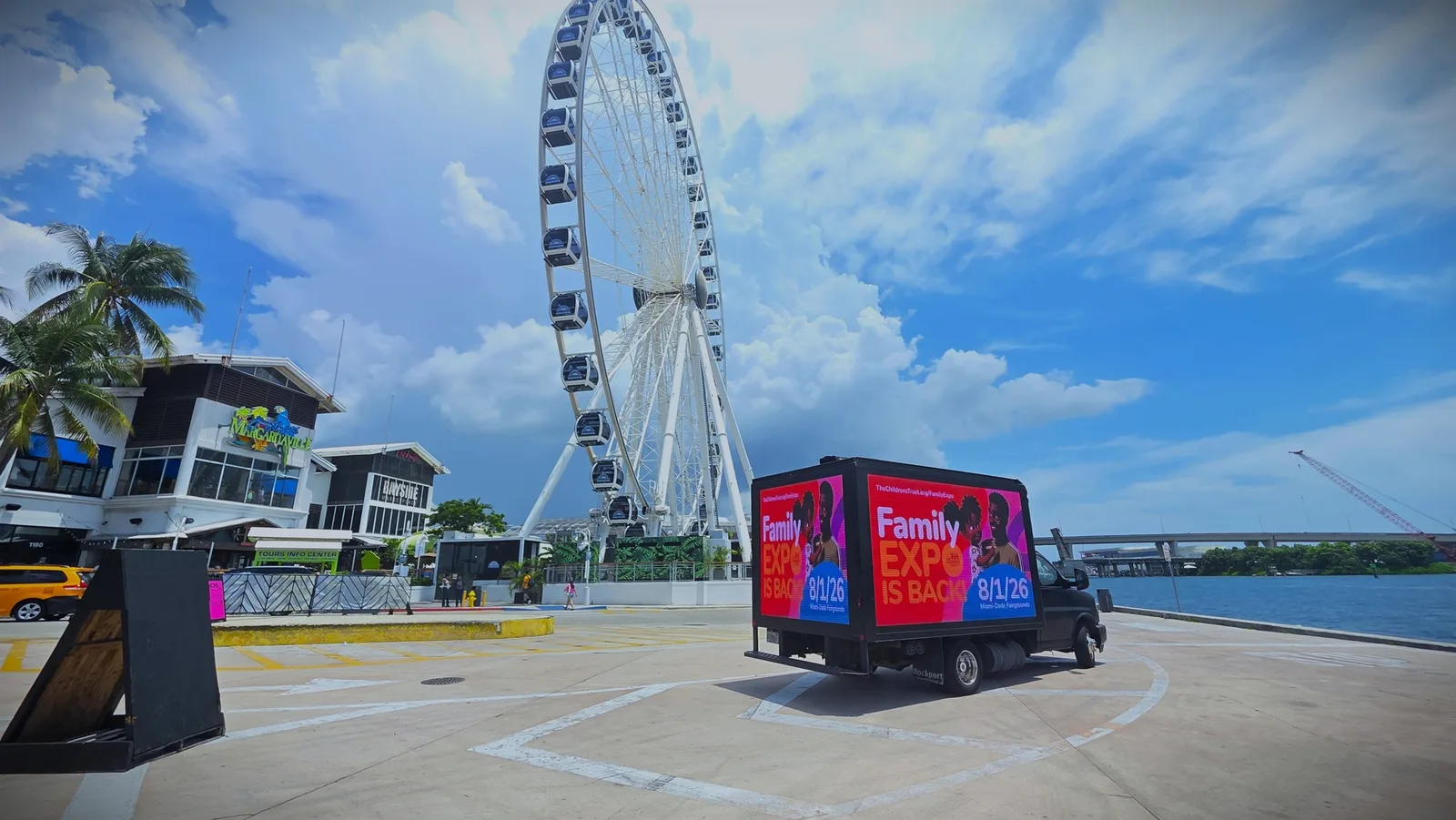
1. Define one primary objective
Start with the action you want your audience to take. One primary objective gives the message, duration and target areas a clear direction.
You may want to build awareness, announce a grand opening, support a concert or sporting event, attract visits to a business, or send people to a registration page. Choose one main call to action and, when useful, track it with a dedicated URL, promo code or QR code.
- Brand awareness or product launch
- Grand opening or limited-time promotion
- Concert, convention or sporting event
- Visits to a store, restaurant or venue
- Registrations, ticket sales or inquiries
2. Identify your audience and priority areas
Decide who you want to reach and where they are most likely to spend time. A local opening may focus near the business; an activation may prioritize approaches and commercial areas near an event.
Brickell and Downtown combine business, residential, visitor and dining activity. Wynwood centers on art and entertainment; Miami Beach brings together tourism, hospitality and events; Coral Gables and Bayside can support different objectives. These are planning points, not guaranteed audience profiles or placements. Final routing depends on dates, traffic, access, availability and operating conditions.
3. Choose the right campaign duration
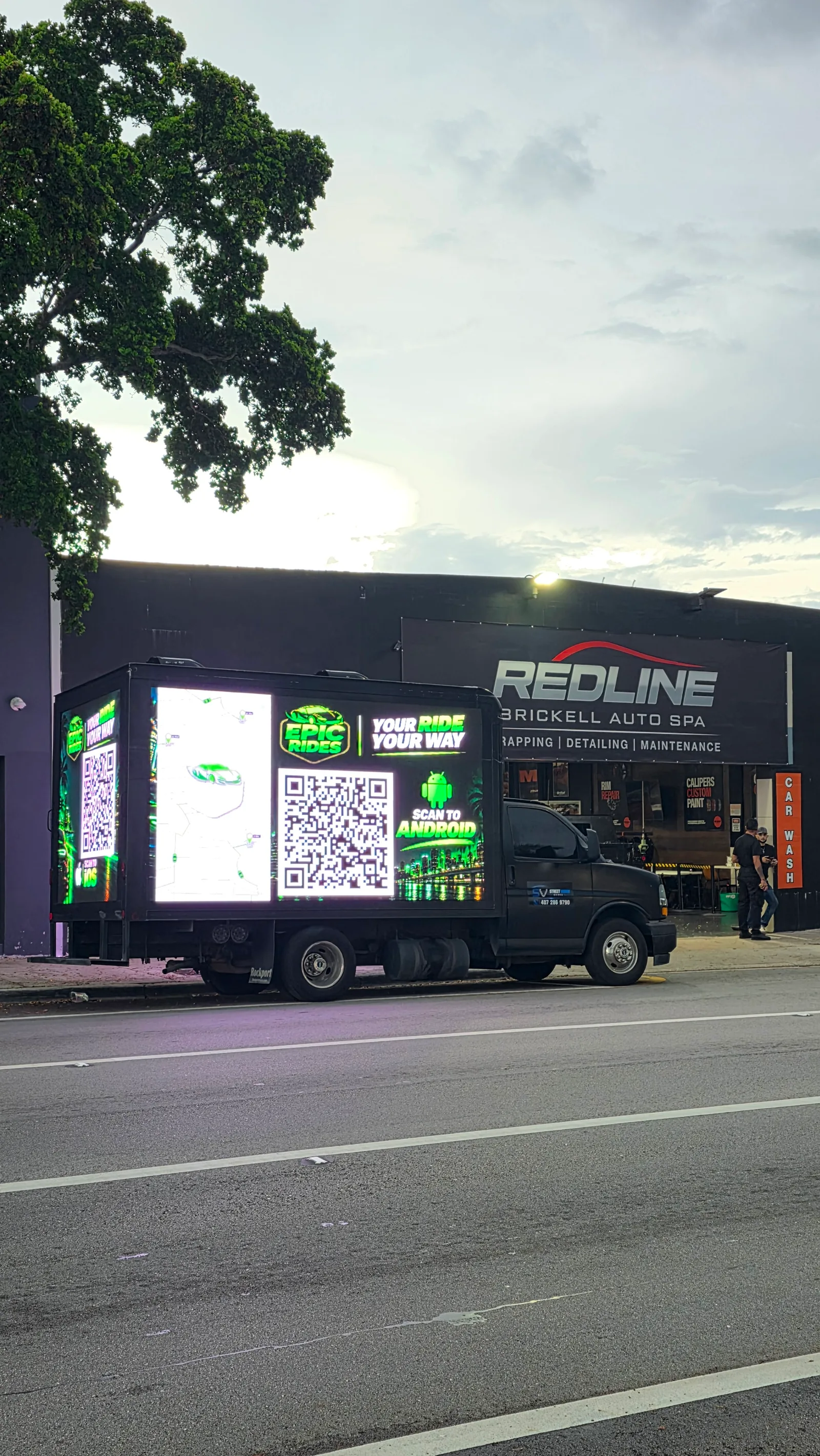
A service day can fit an opening, launch or key date. A weekly campaign creates more opportunities for recognition. Monthly planning provides continuity and can align service days with different campaign moments.
Street Vision Media offers daily, weekly and monthly options, always dedicating all three screens to one brand. The campaign options page explains the formats; your custom proposal confirms dates, operating windows, target areas, availability and investment.
- Daily: focused impact around one date
- Weekly: repetition across multiple service days
- Monthly: sustained presence
- Custom: scope built around the project
4. Build creative for a glance
A moving screen needs one simple idea: recognizable branding, short copy, large type, strong contrast and one call to action. Avoid turning the ad into a flyer filled with details.
A QR code can support the creative, but it should not be the only response option. Not everyone will have time or a safe opportunity to scan it. Keep essential information on the screen and place secondary details on a mobile-friendly landing page.
- One primary idea
- Short, readable copy
- High contrast
- One clear action
- A tested QR code backed by another reference
5. Plan dates, routes and operating hours
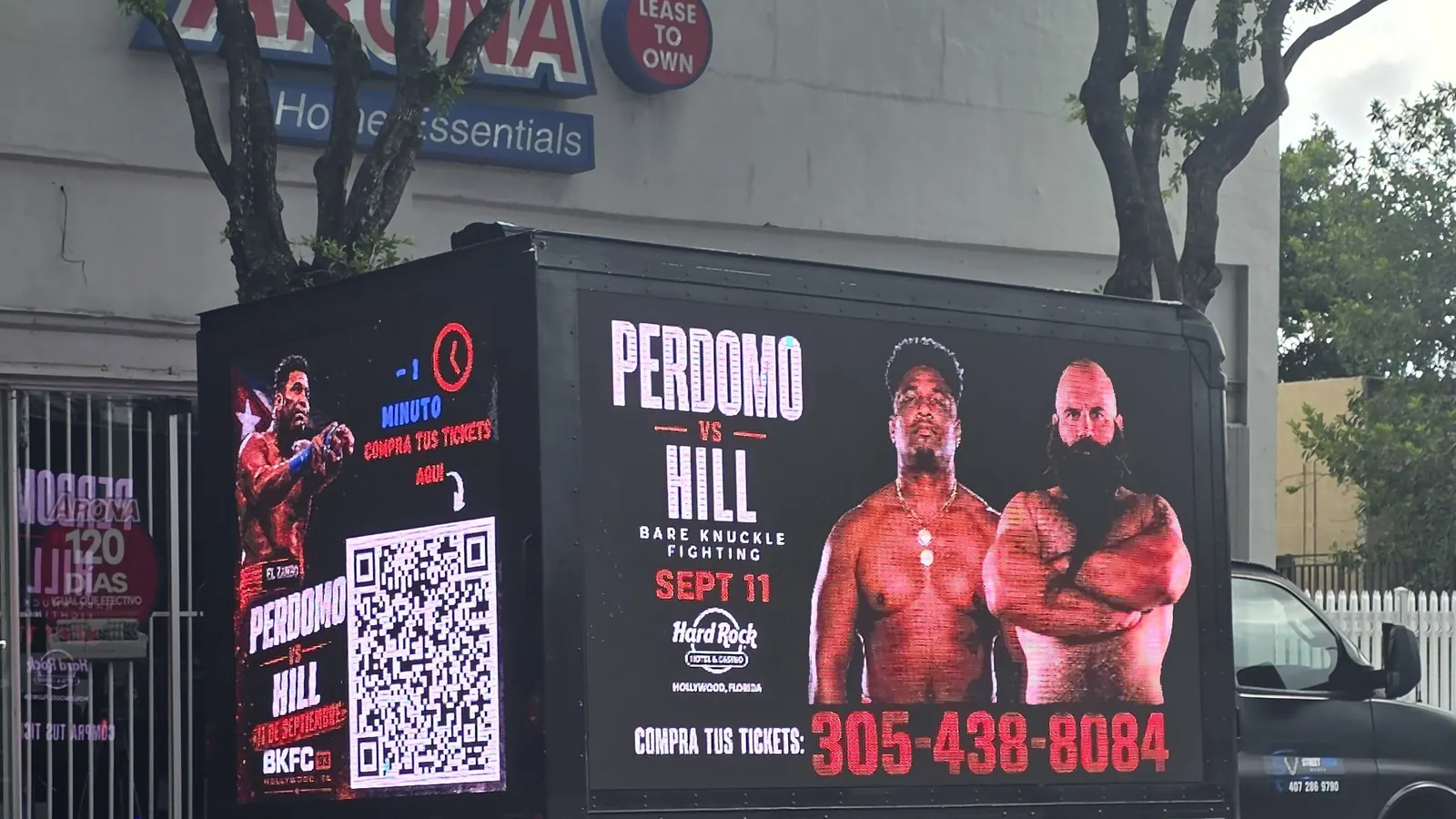
Choose dates that support the most important moment. For an event, you may build awareness beforehand or focus coverage on the event day. For a promotion, align service with business hours and the offer period.
A service day can operate for up to eight hours, depending on the booking. Routing is designed around priority areas and time windows. Traffic, closures, restrictions, weather and access can change the route; an exact corner, parking location or venue access is only confirmed when authorized in writing.
6. Decide how you will evaluate response
Depending on route, schedule, traffic and operating conditions, Street Vision Media estimates a potential daily audience of 30,000 to 40,000 people. This is a planning reference, not a guaranteed count of unique people, verified impressions or business outcomes.
Before the campaign starts, choose the signals you will review: visits to a dedicated landing page, inquiries, registrations, promo-code use or QR scans. None of these metrics alone represents every person who saw or remembered the ad.
7. Review the proposal before booking
The written proposal should identify dates, duration, operating hours, planned coverage, included services, creative work when applicable, investment and campaign conditions.
Street Vision Media provides an operated mobile advertising service. It is not a self-drive truck rental or a stationary event screen. Clarifying that difference helps you compare services that solve the same need.
- Service dates and duration
- Operating hours and planned coverage
- Included services and follow-up
- Creative production or adaptation
- Investment, availability and conditions
References and working criteria
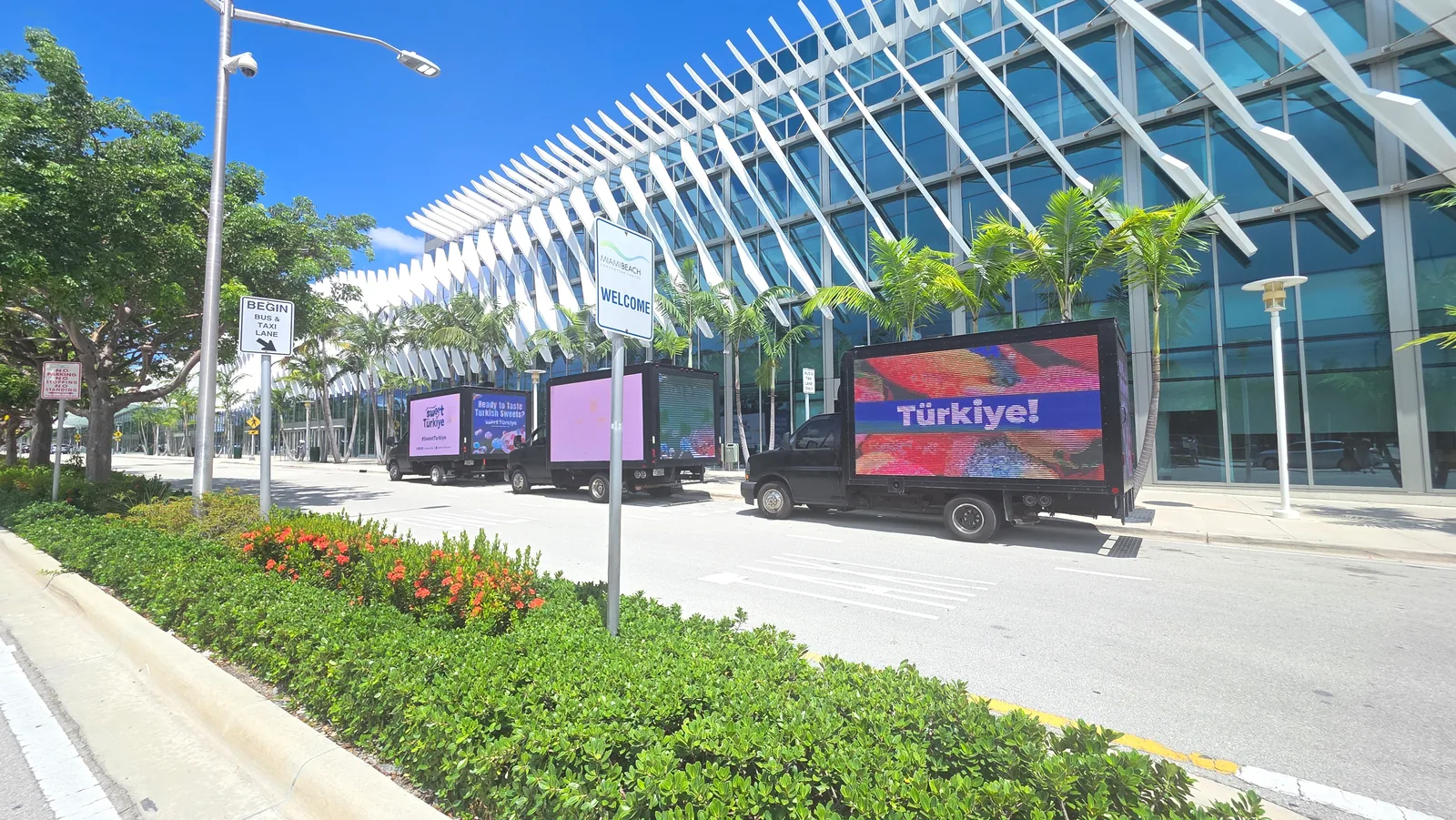
This guide combines Street Vision Media's operating experience with out-of-home measurement guidance and digital-signage creative practices.
Street Vision Media · Miami
Turn your plan into a campaign
Share what you want to promote, your preferred dates and priority areas. We will review scope and availability, then prepare a personalized proposal.